

I don't pretend to be an AI expert–certainly not on the technical side–but I was lucky enough to spend the last year writing for a fast-growing AI company.
As part of that, I got to interview experts working at the intersection of AI and quite a few different fields.
Without going into specific industries or directly quoting, here's what I've learned about AI so far (in general terms):
Quick note: I have some great newsletter editions with founders in the works. But founders are busy. And I don't have final sign-off to post just yet. So in the meantime, I'm sharing some of my own thoughts, reflections and learnings.
1. AI is coming for our jobs (but not in the way you think yet) 🤔
Yep, AI will automate many jobs. But it's starting with the boring, repetitive stuff that most of us don't like to do anyway. Taking meeting notes, writing standard emails, initial prototyping, data entry–tasks that drain energy without adding much value.
What's left? The more important, strategic, challenging and genuinely rewarding work. One expert described how AI freed up employees from repetitive tasks, allowing them to focus on work that is not time-critical but more interesting and meaningful. Another explained how their teams now get to do lots of different stuff, which he said is much better, because humans are not that suitable for repetitive work.
What I find interesting: rather than eliminating jobs, we're seeing AI make people and teams dramatically more productive. The same teams can now tackle much bigger challenges than before. One CTO calculated that their 300-person engineering team now operates at the equivalent of 1,000 thanks to AI.
Most experts I spoke to also believe AI will follow the pattern of every major technological revolution before: it will destroy some jobs while creating entirely new categories of work we can't even imagine yet.
2. Solutions should come from real problems 🎯
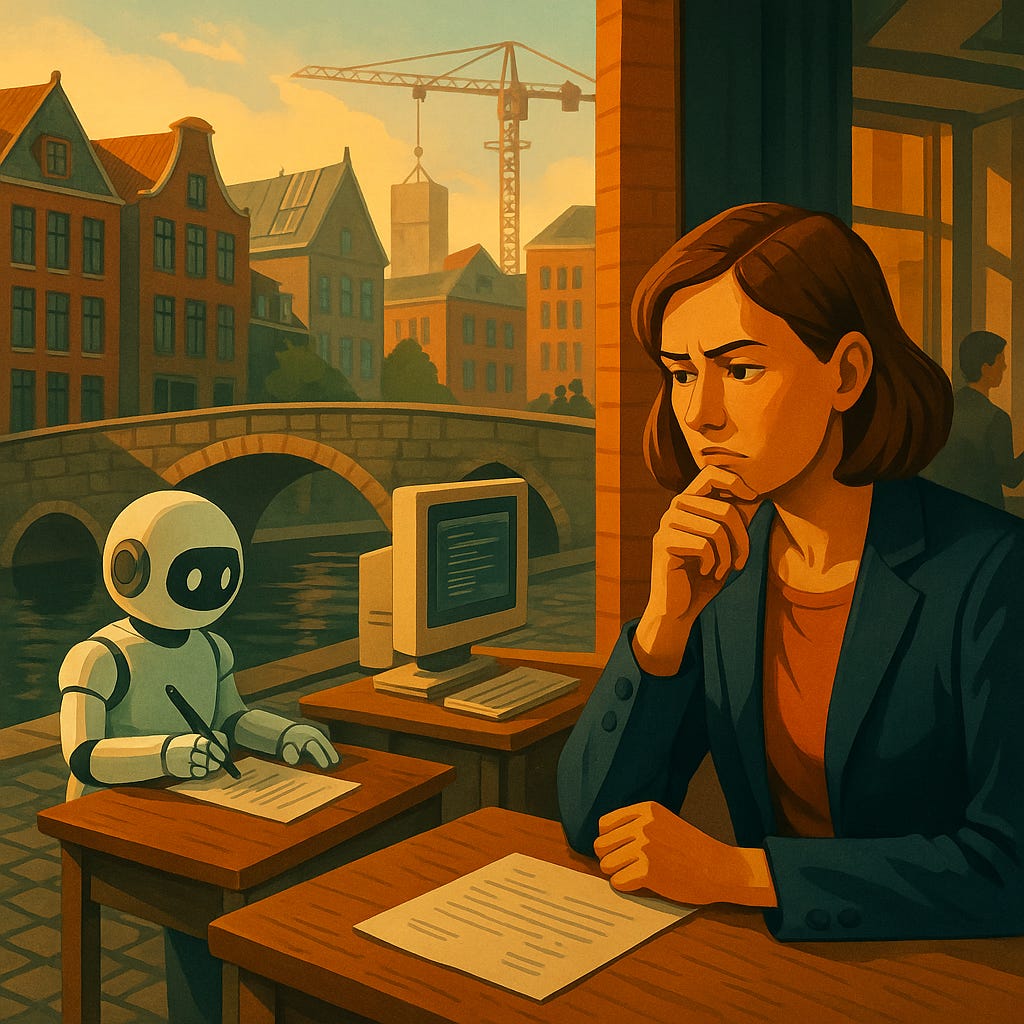
Too many AI use cases are desperately searching for problems to be applied to. This backwards approach rarely works. Many AI projects fail because startups approach industries and corporates with cool technology looking for problems to solve.
The most successful implementations start with domain experts saying "this specific workflow is really painful" and then working with experts and builders to make AI that addresses that exact pain point.
One expert explained how they spent months with industry professionals before even writing a single line of code, ensuring they understood the problem deeply enough to build something people actually needed. And would use.
This is the way.
3. Sometimes AI is not the best solution 🧩
Despite the hype, AI isn't always the fastest, cheapest, or most effective solution.
Sometimes old-school machine learning works better. Sometimes a simple rule-based system is more reliable. Sometimes the solution is nothing to do with technology–it's about changing a process or having a conversation.
The smartest companies ask "What's the best way to solve this problem?" not "How can we use AI here?"
It’s a crucial difference.
4. Adoption in the real, physical world is challenging 🏗️
AI works brilliantly in controlled digital environments. But applying it to messy, unpredictable real-world situations? Things get complicated.
Autonomous vehicles still struggle with edge cases that human drivers handle instinctively. Healthcare AI systems trained on one population don't work well with another. Industrial robots need constant maintenance.
The physical world has variables that digital models can't fully capture. Every expert working in this space emphasised the big gap between success in the lab, or test environments, and real-world deployment.
5. Humans are often the blocker 🙅♀️
Technical limitations aren't always the biggest challenge–people often are. Resistance to change, fear of job loss, and lack of trust in automation often slow down AI adoption (more than technical constraints).
One expert said they spend way more time on change management than on AI development. Another described how their biggest breakthrough came from getting users comfortable with the technology, not on improving the AI itself.
There's another human factor that can be a blocker: organisational processes often sabotage AI productivity gains. Even when AI tools could complete work in half the time, teams still tend to use their old methods, and work expands to fill the available time.
This explains why many companies aren't yet seeing the dramatic productivity gains they expected from AI.
6. It's moving ridiculously fast 💨
New models, tools and use cases emerge daily. What was impossible six months ago is now commonplace.
Keeping up is like drinking from a fire hose.
Experts who've worked in AI for decades describe going through complete hype cycles: initial excitement, disappointment, then finding genuine value in months. This means companies need new frameworks for evaluating and adopting AI tools quickly.
Early adopters can gain significant advantages, but they risk building on foundations that become obsolete super quickly. Several experts mentioned having to rebuild systems multiple times as underlying technologies evolved.
7. All-purpose robots are some way off 🤖
Despite the hype around humanoid robots, most experts convinced me that truly general-purpose robots remain distant. The technical challenges are huge: power consumption, dexterity, reliability, cost and safety all present major hurdles.
But specialised robots for very specific tasks? Absolutely. There’s great progress in manufacturing, logistics and service industries where robots perform narrow, well-defined tasks.
But the vision of humanoid assistants seamlessly integrated into our daily lives? That’s still science fiction. For now.
8. Human connection is more important than ever 🤝
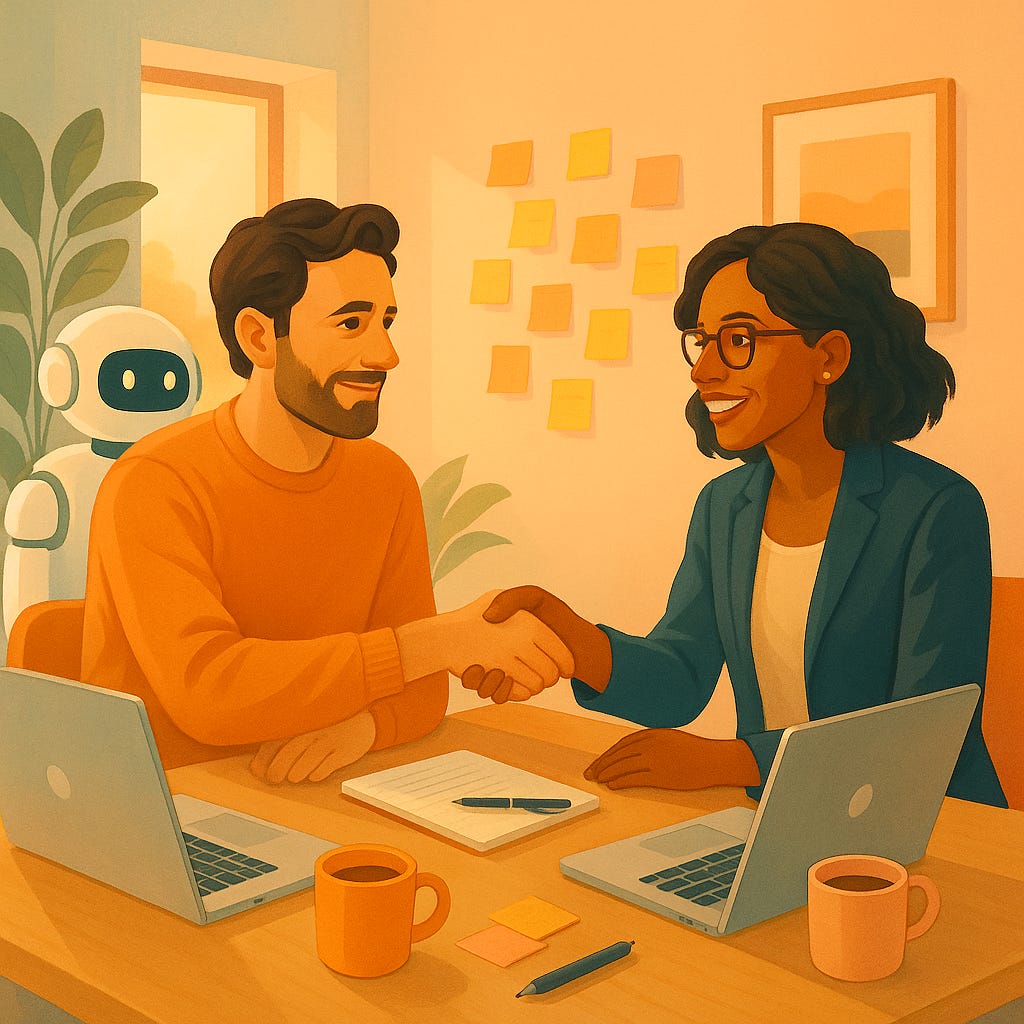
As AI handles more of our routine tasks, the human element of work becomes even more valuable. Creativity, empathy, reasoning and genuine relationship-building can't all be automated.
Several leaders I spoke with deliberately kept in-person interactions, even when AI could technically handle some of the communication. They recognised that connection, trust and collaboration remain key to achieving results.
Authenticity and genuine human connection are becoming premium assets.
Communication skills are becoming more critical. Since AI increasingly use natural language through prompts, even technical professionals now need strong communication skills to work effectively with AI tools.
Also, some of the most successful real-world AI implementations maintain a "human in the loop," rather than full automation. This hybrid approach addresses both technical limitations and societal comfort levels with AI.
9. An efficiency vs. craft dilemma ⚖️
There's growing concern about losing fundamental skills as AI handles more and more tasks. Some leaders are instituting "AI-free days" to preserve core capabilities, worried that new professionals who only work with AI tools won't develop the underlying expertise needed to properly evaluate AI-generated work.
There’s a tension between embracing efficiency and maintaining craftsmanship. Can you properly review code if you never learned to write it from scratch? Can you spot problems in AI-generated content if you haven't developed the underlying skills yourself?
The experts wrestling with this question don't have clear answers yet, but they recognise it as a critical issue for the long-term.
10. Collaboration over competition 🫱🫲
There's an emerging trend of sharing AI knowledge rather than hoarding it for competitive advantages. e.g. some publish their AI models as open source for others to adapt. This collaborative approach accelerates adoption across entire sectors, with organisations realising they can compete on execution while sharing fundamental tools and knowledge.
This shift represents a recognition that the real competitive advantages are not in having secret AI algorithms, but in how effectively you implement and integrate AI into your specific business context.
11. Multi-modal integration 🔀
The future lies in AI systems that can process multiple types of data simultaneously–text, images, audio, sensor data–similar to how humans use multiple senses. This multi-modal approach creates more robust and reliable systems than any single input method could, and represents an evolution from today's more specialised AI applications.

12. Ethical and legal considerations are hard 🧑⚖️
Who's responsible when an AI system makes a mistake? How do we ensure AI systems are fair and unbiased? What happens to privacy when AI can analyse vast amounts of personal data?
These aren't philosophical questions. They have real business implications. Every expert grappling with these issues emphasised that we're still figuring out the frameworks for AI governance.
The regulatory landscape is evolving rapidly, and companies that don't think about these issues early often find themselves scrambling to comply with new requirements later.
13. The US and China are way ahead 🏁
A sobering reality check in many of my convos. While Europe has strong technical talent and thoughtful regulation, the US and China dominate in terms of investment, scale, and speed of deployment.
The gap is huge and it’s a combination of money, market size, risk tolerance and (lack of) regulation. American and Chinese companies can test AI systems at massive scale in ways that European companies can't.
This doesn't mean European companies can't compete, but it means they need different strategies: focusing on quality, specialisation and areas where regulation could actually be an advantage.
After a year of these conversations, I'm cautiously optimistic about a future where AI handles the work we don't want to do, freeing us up for the work we find meaningful.
But getting there requires thoughtful implementation, not just technical skills. The companies who succeed with AI won't just be the most technically sophisticated–they'll be the ones who understand how to blend AI with the skills and connections that make us uniquely human.
As I'm wrapping up my time with this AI client, I have room for new work and projects for the coming months. Interested in doing more writing as a founder or at your company? Reach out (I’d love to write more about AI too)
Until next week,
Dan